
The short answer
When you press the pedal, fluid pressure pushes the caliper, the caliper squeezes the pads, and the pads grip the rotor that turns with the wheel. Pads and rotors wear out by design. Calipers and their slide pins need to move freely, or they wear everything else out early.
- Squeal when braking: the pads are near the end. Book it soon.
- Grinding: metal on metal. Stop driving it as soon as you safely can.
- Pedal or steering wheel shakes when braking: rotors are worn unevenly.
- Car pulls, smells hot, or a wheel is much hotter than the others: a caliper or pad is sticking.
The parts
- Brake pads
- What it does: Friction material pressed against the rotor.
- How it fails: Wear thin. Rusted pads can seize in their brackets and stop moving freely.
- Rotors
- What it does: The disc the pads grip.
- How it fails: Wear thin, wear unevenly and shake, or get scored when pads go metal to metal.
- Calipers
- What it does: Squeeze the pads with fluid pressure.
- How it fails: Corrode and stick, so the brake drags and overheats. Heat ruins the caliper's seals.
- Slide pins and hardware
- What it does: Let the caliper and pads move and center.
- How it fails: Rust or dry out. The pads wear unevenly or drag.
- Brake hoses
- What it does: Carry fluid to each caliper.
- How it fails: Age, swell inside or crack. Overheating from a dragging brake damages them too.
What we see most
- Warped rotors. The most common brake complaint we see: a shaking pedal or steering wheel when you stop.
- Corroded calipers and rusty pads that don't move freely. The brakes drag and overheat.
- Low pads plus seized guide pins or a stuck caliper. One small problem turns into a big one once things go metal to metal, or the heat ruins caliper seals and hoses.
- Bad calipers or hardware causing a pull to one side, or in the worst cases, little to no braking.
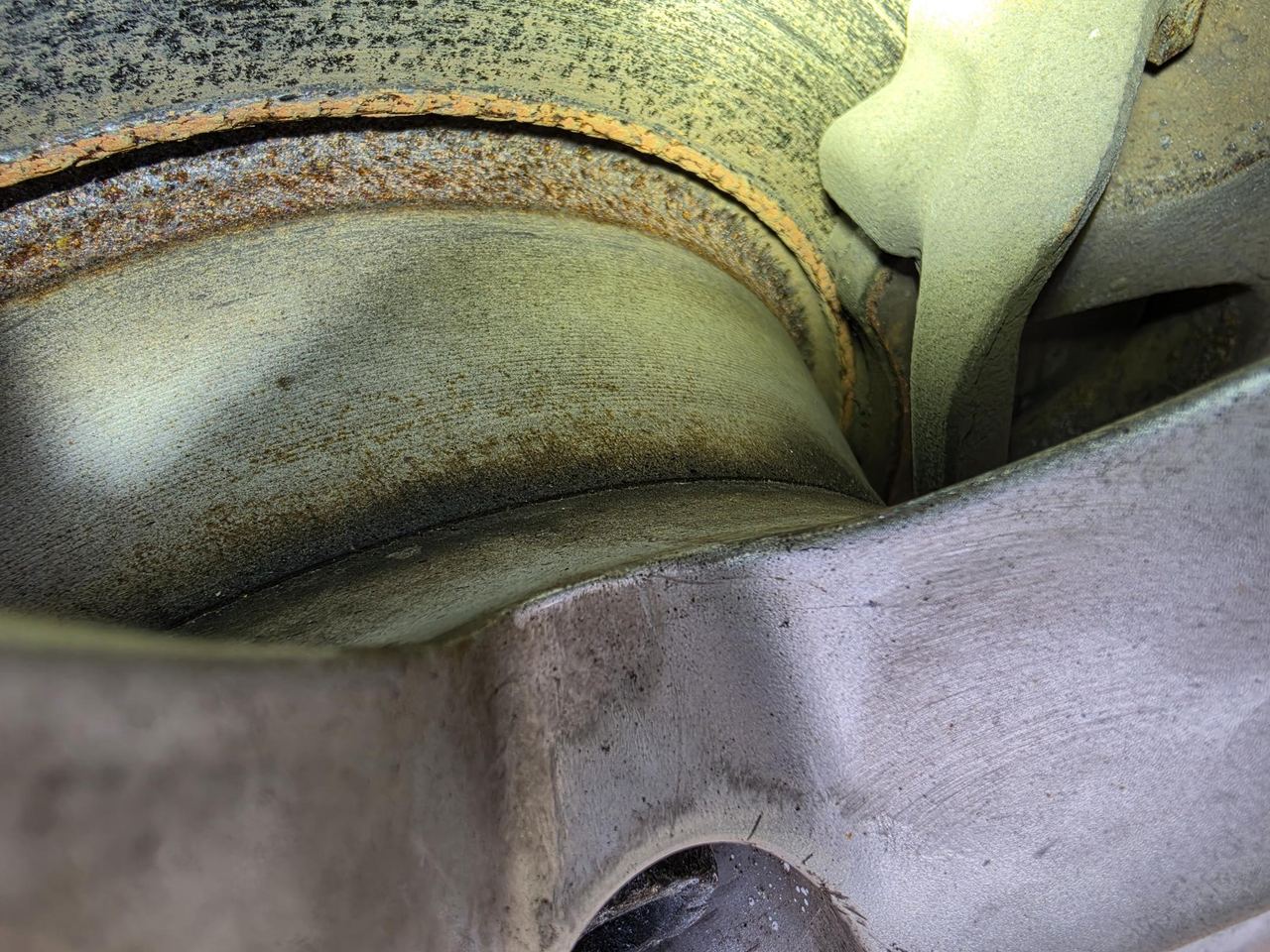
The point of no return. The squeal is a small metal tab, the wear indicator, built to rub the rotor when about 2 mm of pad is left. We see it ignored until the tab breaks off. The squeal stops, and it sounds like the car worked through something or fixed itself. It didn't. With the tab gone, nothing warns you, and a few weeks later the pad is gone and it's metal on metal: a loud grind, and a rotor and often a caliper that now need replacing too.
How your car warns you about worn pads
Not every car warns you the same way:
- A squealer tab. A small metal tab on the pad that screeches against the rotor when the pad is low.
- An electronic sensor in the pad. It turns on a brake pad warning light on the dash when the pad wears down to it. The sensor usually needs replacing with the pads.
- A service schedule. Some cars don't measure the pads at all. They estimate pad life and remind you to replace them on a schedule, as preventive maintenance.
Listen to your car's warning lights, and if there's a sound, get it checked.
We identify which system your car uses and use only the best aftermarket and OEM parts, including a new sensor when your car needs one.
What a brake job includes
- Inspect the whole corner. Pad thickness on both sides, rotor condition, caliper movement, slide pins, hoses and fluid.
- Replace what's worn. Pads, and rotors when they're too thin, scored or worn unevenly.
- Free up or replace what sticks. Clean and lubricate slide pins and pad brackets, and replace a caliper that won't release.
- Test it. Pedal feel, a test drive, and a check that no wheel is running hot.
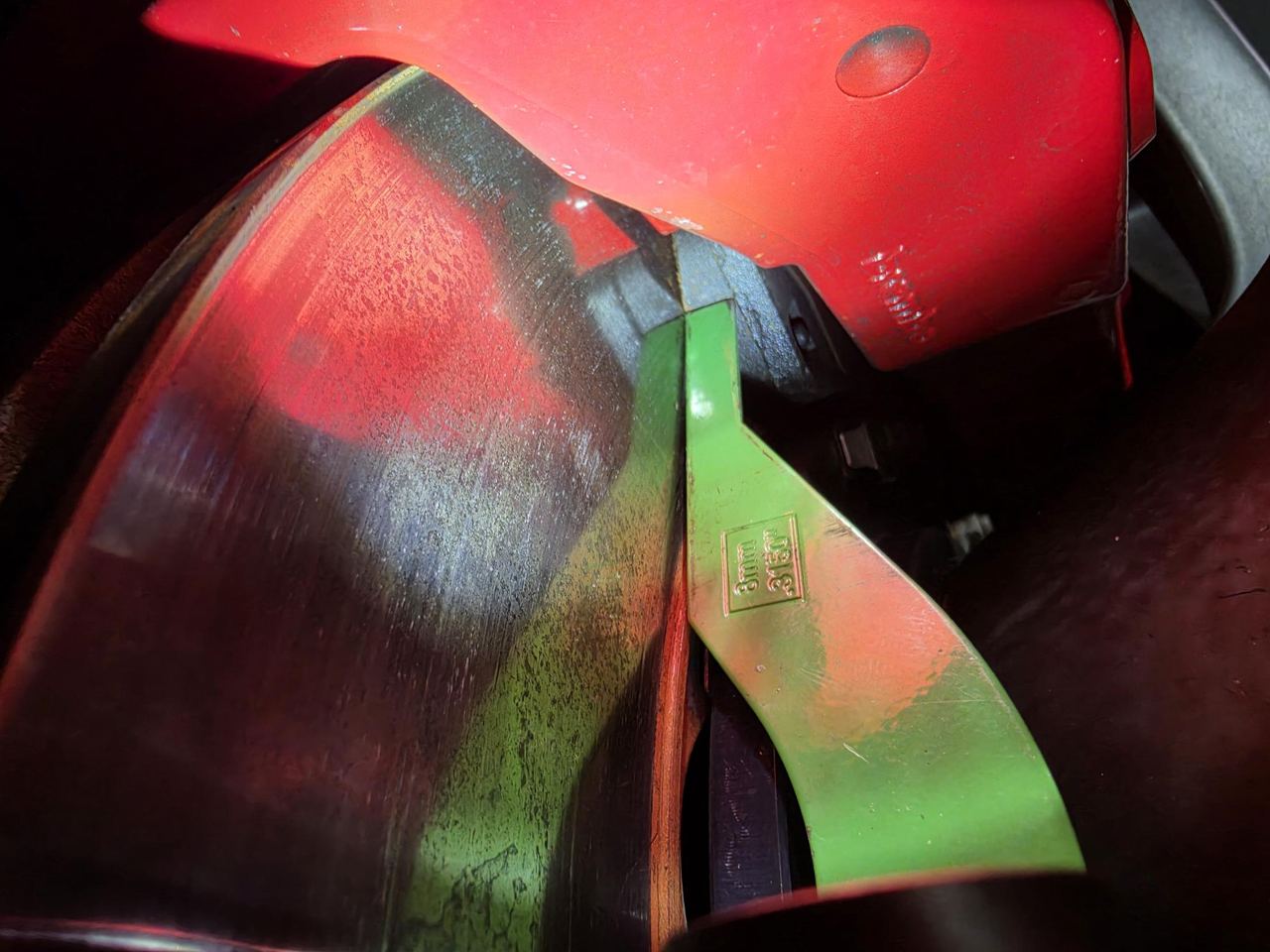
Cars have come a long way. Newer brake systems are tied to the car's computers for ABS, stability control and automatic braking. That helps safety, but it means a brake repair can now include satisfying the computer: calibrations, relearns and programming that the old find-the-leak jobs never needed.
High-end brakes
Some high-end and performance cars use carbon-ceramic rotors. A brake job on those can run thousands of dollars, and on some cars tens of thousands. We'll tell you up front if your car has them.
What drives the cost
- Pads only, or pads and rotors. Rotors that are thick and even can stay.
- The parts. Pad material and rotor quality, from economy to premium and OEM.
- What else is worn. A sticking caliper, seized slide pins or a pad sensor add to the job.
- The vehicle. Trucks, performance brakes and electronic parking brakes cost more. Carbon-ceramic brakes cost far more.
That's why we don't post one price for every car. See how our estimates work. Our rates are on our Rates page, and every repair gets a written estimate before work starts.
Getting it fixed
- Find the cause first. The right part gets replaced, not a guess.
- Written estimate first. You see what failed before any work starts.
- Your choice of part. Options are ranked by quality and warranty term, from the best aftermarket and OEM parts.
- Where: where the car is parked, in Charlotte and the Lake Norman area. Like every repair we list, not every car can be done in a driveway. If we quoted your repair and can't reach the part when we arrive, your deposit is refunded.
Updated November 26, 2026.