
The short answer
Hot coolant leaves the engine through a hose, runs through the radiator where moving air pulls the heat out, and comes back through another hose. Fans pull air through the radiator when the car is slow or stopped. The cap holds the system under pressure, which raises the coolant's boiling point. A weak link anywhere leads to leaks or overheating.
The parts
- Radiator
- How it fails: Plastic side tanks crack, seams leak, or the inside clogs. Bent or packed fins block airflow.
- Hoses
- How it fails: Get soft, swollen, cracked or crusty at the ends. A hose that feels mushy when cool is near the end.
- Cooling fans
- How it fails: Electric fans fail from a bad motor, relay, fuse or sensor. Overheating at idle or in traffic is the clue.
- Fan clutch
- How it fails: On engine-driven fans, a worn clutch slips and overheats at idle, or locks up and roars.
- Cap
- How it fails: A worn seal lets pressure out, so coolant boils over or escapes to the reservoir.
- Reservoir
- How it fails: Plastic tanks crack with age and heat.
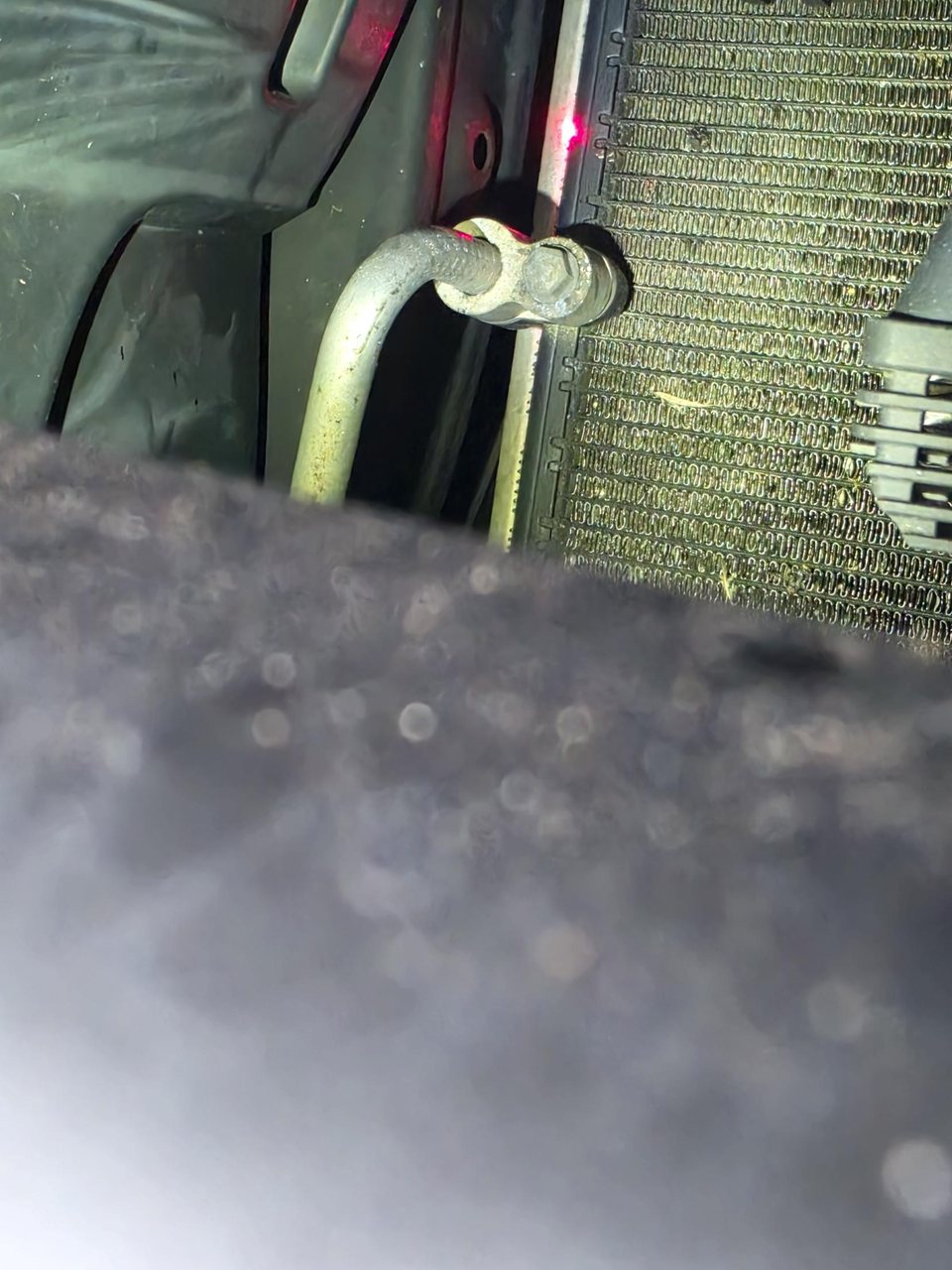
The AC can be in the way. On some cars the AC has to be emptied before the radiator comes out, which adds time to the job.
Things you can check at home
Never open the radiator cap or coolant reservoir on a hot engine. The system is under pressure and the coolant can be well above boiling. Wait until the engine is cool to the touch.
- Check the coolant level, engine cold. The reservoir has COLD or MIN and MAX marks. Low coolant means it's going somewhere.
- Look at the color. Coolant comes in green, orange, pink, blue or yellow depending on the car. Brown, rusty or oily coolant is a warning sign. Don't mix types; top off with what your owner's manual calls for.
- Look and smell for leaks. A sweet smell, a crusty white, green or pink residue around hoses and the radiator, or drips under the front of the car after it sits.
- Check the belt. With the engine off, look for cracks, shiny glazed ribs or missing chunks.
- Watch the fans. With the engine warm and idling and the AC on, the electric cooling fans behind the radiator should run.
Coolant is poisonous and tastes sweet to pets and children. Wipe up spills and keep the jug capped.
Getting it fixed
- Find the cause first. The right part gets replaced, not a guess.
- Written estimate first. You see what's failing before any work starts.
- Your choice of part. Options are ranked by quality and warranty term, from the best aftermarket and OEM parts.
- Where: where the car is parked, in Charlotte and the Lake Norman area. Like every repair we list, not every car can be done in a driveway. If we quoted your repair and can't reach the part when we arrive, your deposit is refunded.
Get a quote for a radiator or hose repair
Updated November 28, 2026.