
Do this right now
- Turn off the AC, turn the heat on full hot, fan on max, and open the windows. Your heater core is a mini radiator. Running it full blast pulls heat out of the coolant. Uncomfortable, but it's proven to help.
- Pull over somewhere safe and shut the engine off.
- Don't open the hood cap or reservoir. Hot coolant is under pressure.
- Don't keep driving it hot. An engine run hot can warp its cylinder head or fail its head gasket, and that turns a hose or thermostat into a much bigger repair.
If the battery light came on at the same time, the belt that turns the water pump may have broken. Don't drive it at all.
What usually causes it
- Low coolant from a leak
- What happens: The most common cause. A hose, radiator, water pump or heater core is leaking.
- Thermostat stuck closed
- What happens: Coolant can't reach the radiator. Often overheats quickly, with the upper radiator hose hot and the lower one cool.
- Cooling fan not running
- What happens: Fine on the highway, overheats in traffic or at idle.
- Water pump failing
- What happens: Weak flow, a leak from its weep hole, or a wobbly pulley and noise.
- Broken or slipping belt
- What happens: On many engines the same belt drives the water pump. Often comes with a battery light.
- Clogged radiator
- What happens: Inside from old coolant, or outside from bugs and debris blocking airflow.
- Air trapped in the system
- What happens: After a repair or coolant change that wasn't bled. Some engines are hard to bleed.
- Head gasket
- What happens: Coolant disappears with no leak to see, white sweet-smelling exhaust, or bubbles in the reservoir.
Things you can check at home
Never open the radiator cap or coolant reservoir on a hot engine. The system is under pressure and the coolant can be well above boiling. Wait until the engine is cool to the touch.
- Check the coolant level, engine cold. The reservoir has COLD or MIN and MAX marks. Low coolant means it's going somewhere.
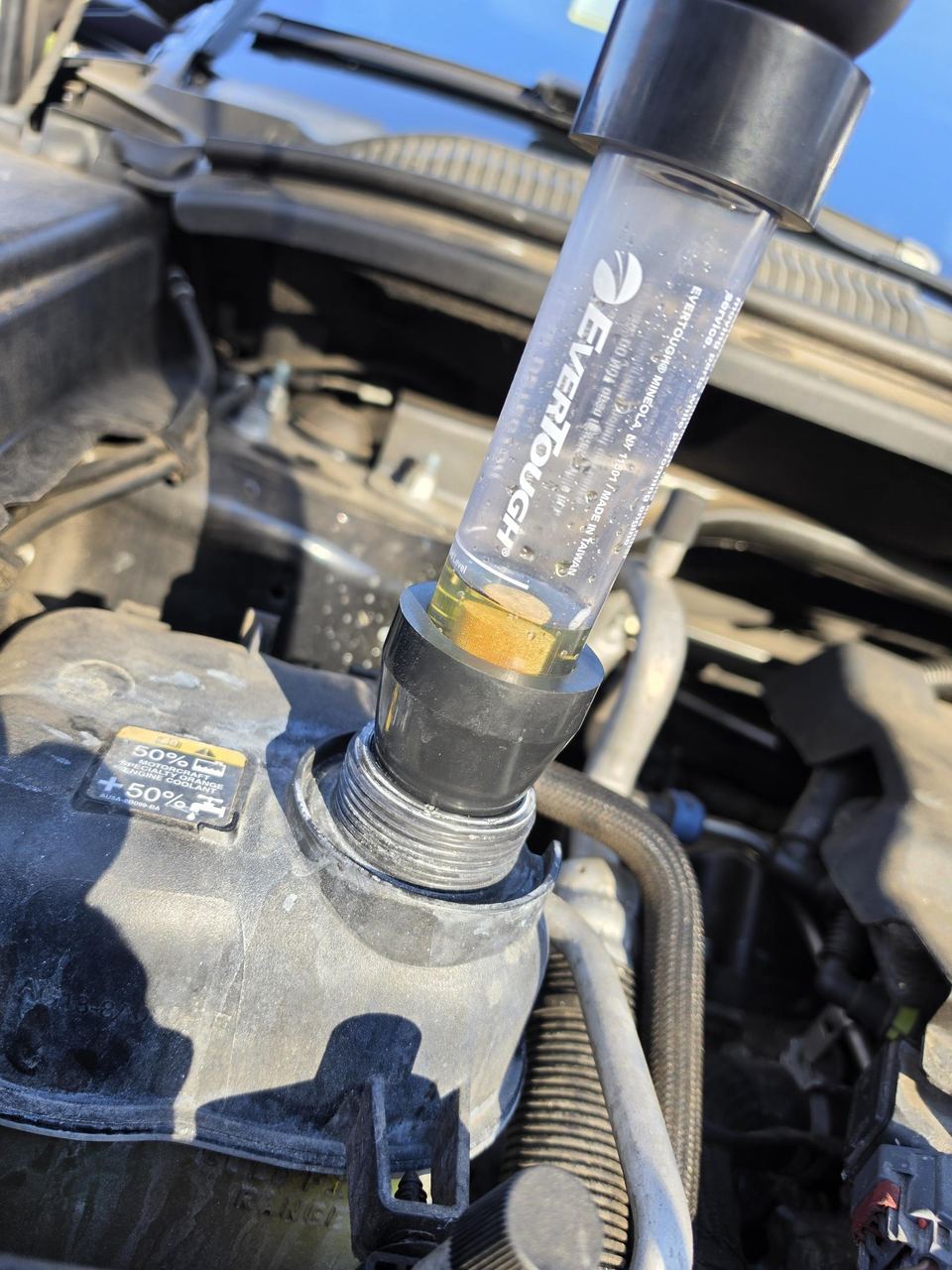
- Look at the color. Coolant comes in green, orange, pink, blue or yellow depending on the car. Brown, rusty or oily coolant is a warning sign. Don't mix types; top off with what your owner's manual calls for.
- Look and smell for leaks. A sweet smell, a crusty white, green or pink residue around hoses and the radiator, or drips under the front of the car after it sits.
- Check the belt. With the engine off, look for cracks, shiny glazed ribs or missing chunks.
- Watch the fans. With the engine warm and idling and the AC on, the electric cooling fans behind the radiator should run.
Coolant is poisonous and tastes sweet to pets and children. Wipe up spills and keep the jug capped.
How we find it
- Pressure test the cooling system to find leaks, even small ones that only leak hot.
- Check the thermostat, fans, belt and water pump while the engine warms up.
- Read live temperature data with a scan tool, and compare it with the gauge.
- Test for combustion gases in the coolant when a head gasket is possible.
Getting it fixed
- Find the cause first. The right part gets replaced, not a guess.
- Written estimate first. You see what failed before any work starts.
- Your choice of part. Options are ranked by quality and warranty term, from the best aftermarket and OEM parts.
- Where: where the car is parked, in Charlotte and the Lake Norman area. Like every repair we list, not every car can be done in a driveway. If we quoted your repair and can't reach the part when we arrive, your deposit is refunded.
Get a quote for an overheating diagnosis
Updated November 28, 2026.