
The short answer
Mice and rats move into engine bays for shelter and warmth, and they chew whatever is there: wiring, EVAP hoses, insulation and air ducts. No brand attracts them. What matters is where the car sits and how easy it is to climb into. It happens most on cars parked on gravel, in fields, under trees or beside hedges, and most in winter.
Rodents are their own wrecking ball. A few chewed wires can turn into warning lights, a no-start or a car that runs badly. Rats in particular can get expensive.
Signs a rodent has been in your car
- Tufts of fiber pulled from the hood liner or insulation.
- Holes chewed in the engine cover.
- Snail shells and nut shells in the engine bay. Snails can't climb up there. Mice carry them up to eat in a safe spot.
- Tiny footprints in the dust on the engine cover, the battery or the top of the radiator.
- Droppings or a nest, often under the cowl or near the cabin air filter.
- A bad smell from the vents, or warning lights that show up after the car sat for a while.
Follow the snails. Shells show where mice stop to eat, which tells us where to look first for chewing.
What they chew
- Wiring
- What happens: Chewed insulation or cut wires. Warning lights, sensors that read wrong, a no-start, or a car that runs badly. At an engine computer connector, chewed wires can touch each other and short.
- EVAP hoses and lines
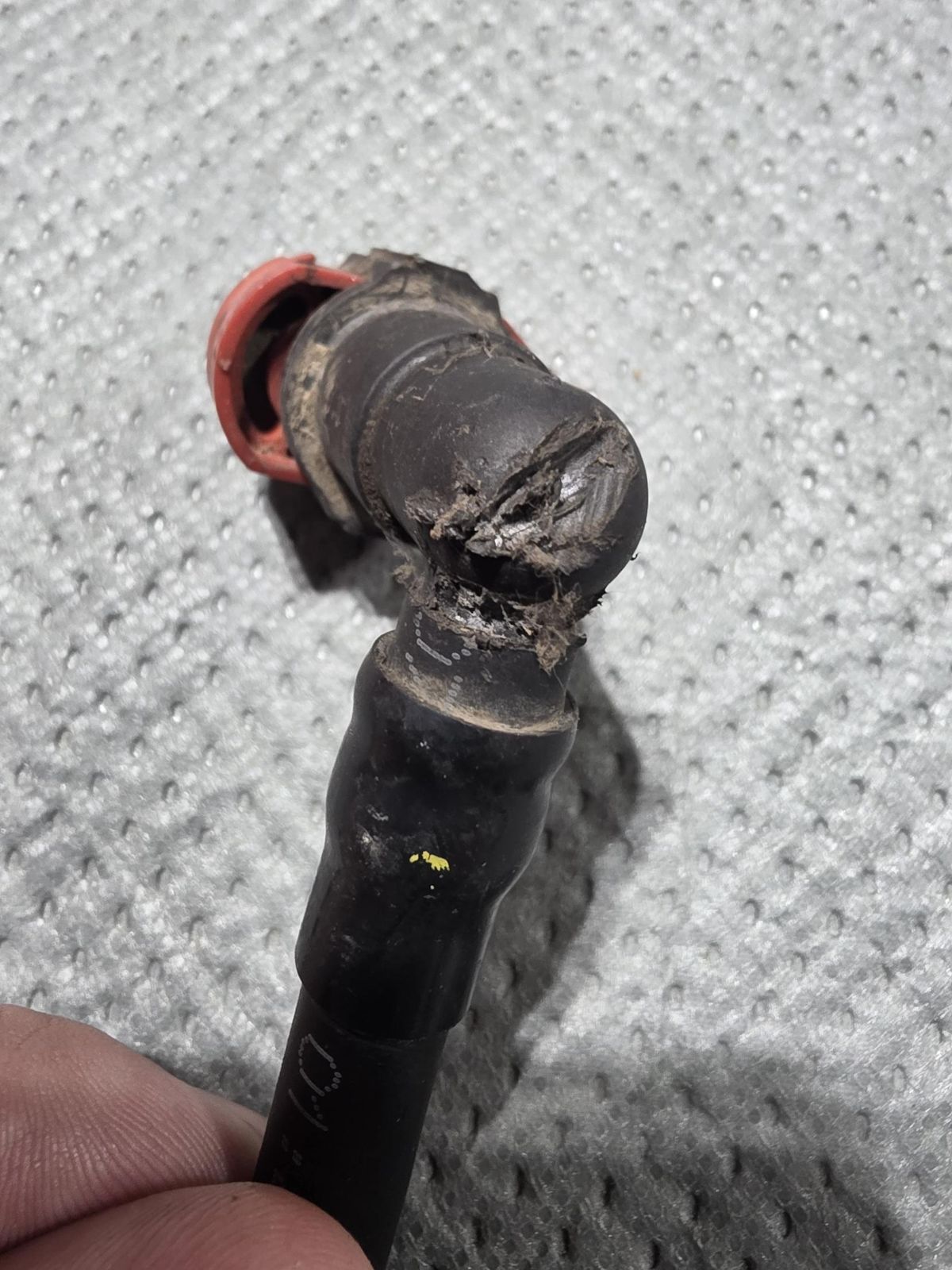
- What happens: Holes in the plastic vapor lines. A check engine light with EVAP leak codes.
- Hood and engine insulation
- What happens: Pulled out for nesting. The tufts of fiber you find are often from here.
- Heating and air ducts
- What happens: Rodents get into the ducts and the dash and can get trapped. A smell or debris from the vents, or a blower that is noisy or blocked.
- Cabin air filter
- What happens: Used as a nest. Air from the vents can smell bad or carry debris.
From our jobs: Jeeps get hit hard. Not because mice prefer them, but because they are easy to get into: the engine computer is exposed and sits on the route mice climb from the tires up into the engine. We have replaced several engine computer (ECM) connector heads on Jeeps where rodents damaged 50 or more wires at the connector, and the bare wires started touching each other.
Also from our jobs: a 2017 Ford F-150 came in with several EVAP codes at once. Rodents had chewed holes in the plastic hoses that route the vent side of the fuel vapor system.
Why do they chew wiring?
We see the most chewed wiring in winter, when mice are looking for food and a warm place to stay, and they go after the wire insulation.
You may have heard that newer cars use soy-based insulation that draws rodents. Several automakers were sued over it, and some automakers say there is no evidence it attracts them. Either way, once a mouse or rat has moved in, it will chew the wiring, so keeping it out is what matters.
How we inspect
- Look for the signs. Shells, nuts, droppings, nests, fibers and footprints in the dust, to find where they have been.
- Check what they chew. Wiring harnesses, EVAP hoses, the cabin air filter and the openings to the heating and air ducts.
- Scan for codes. Chewed wires and hoses often leave codes behind, even before you notice a problem.
- Show you what we found. Photos of the damage, and a written estimate before any repair starts.
We also offer rodent deterrents to help keep them from coming back. The right one depends on what you prefer: traps, bait, or herbal and chemical deterrents that aren't toxic. We'll go over the options with you.
What you can do
- Change where the car sits when you can. Pavement in the open draws fewer rodents than gravel, fields, tree cover or hedges.
- Drive it. A car that sits for weeks makes a better home.
- Pop the hood now and then. Shells, nuts or droppings are an early warning, before anything gets chewed.
- Don't leave food in the car, and clear leaves and debris from under the hood and the cowl.
Getting it fixed
- Find the cause first. The right part gets replaced, not a guess.
- Written estimate first. You see what failed before any work starts.
- Your choice of part. Options are ranked by quality and warranty term, from the best aftermarket and OEM parts.
- Where: where the car is parked, in Charlotte and the Lake Norman area. Like every repair we list, not every car can be done in a driveway. If we quoted your repair and can't reach the part when we arrive, your deposit is refunded.
Rodent damage is sometimes covered by the comprehensive part of an auto policy. Check with your insurer before the repair.
Get a quote for a rodent inspection
Updated November 26, 2026.