
The short answer
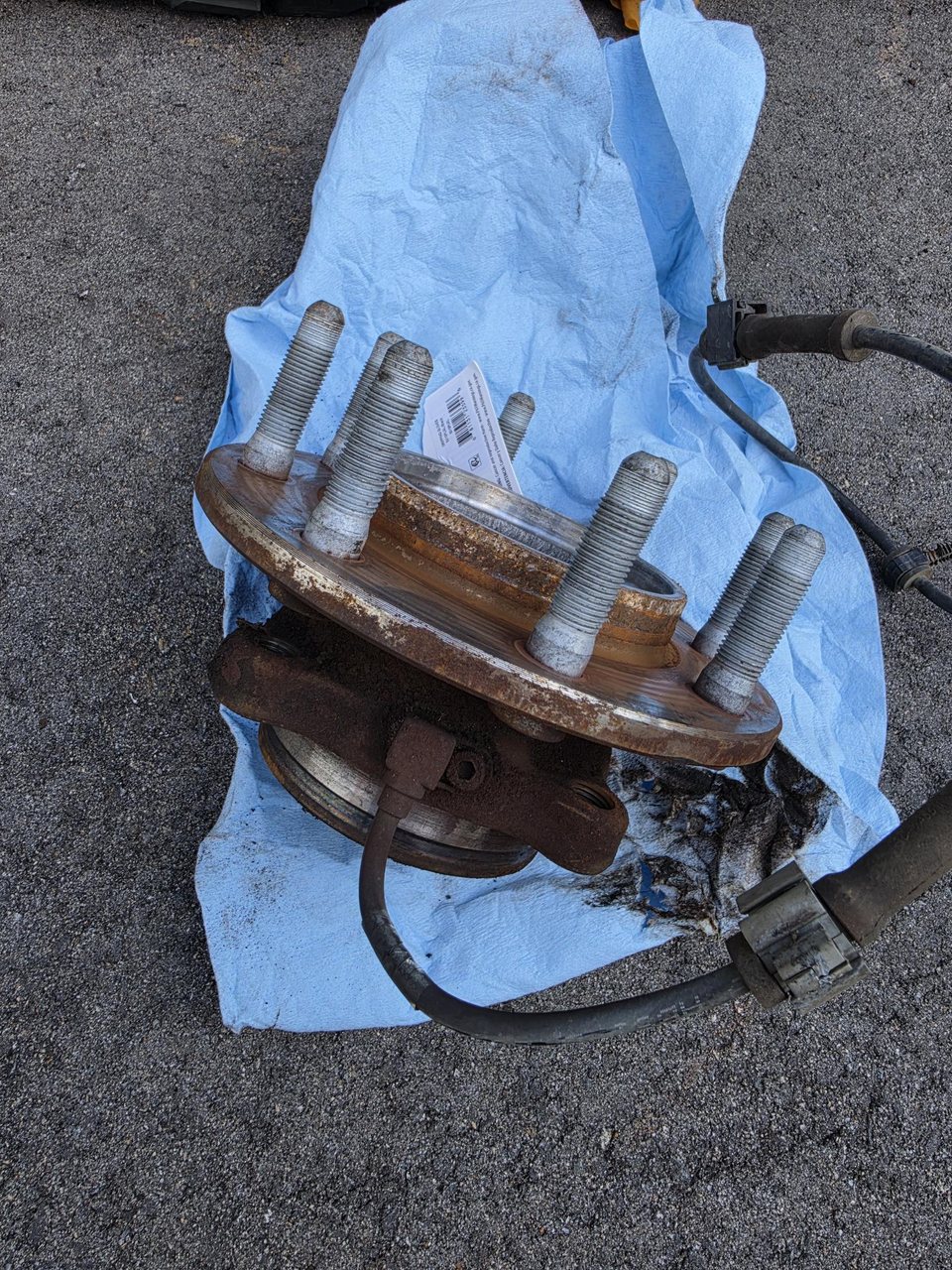
Wheel bearings let each wheel spin smoothly while carrying the car's weight. Most newer cars use a sealed hub assembly that's replaced as one part. A failing bearing hums or growls with speed, and on many cars the ABS sensor reads a ring built into the bearing, so a worn one can turn on the ABS light.
Signs one is failing
- A hum, growl or roar that rises with road speed and may change when turning.
- Play or a clunk when the wheel is rocked top to bottom.
- An ABS or traction light, from a damaged sensor ring.
- Vibration or a loose feel in the steering.
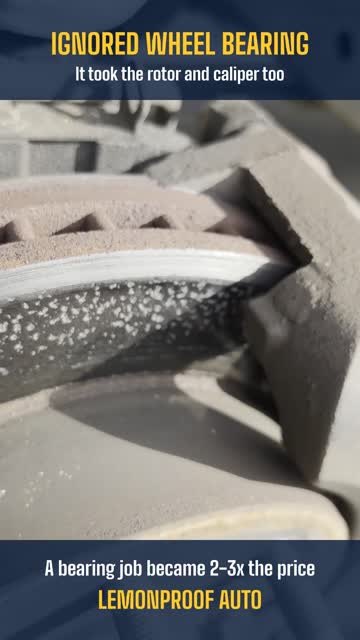 Watch it in under a minuteOur short video on YouTube
Studs and lug nuts
Broken or stretched wheel studs and stripped lug nuts usually come from over-tightening with an impact gun, or from a wheel that came loose. They get replaced, and wheels get torqued to spec, not guessed.
Things you can do at home
- Write down when it happens: speed, turning left or right, braking, accelerating, bumps, cold mornings.
- Check whether it follows road speed or engine speed. Coasting in neutral at a safe moment, a noise that stays is wheels, tires or driveline. One that drops away follows the engine.
- Record it on your phone. Even a short clip helps.
- Look at your tires for uneven wear, bulges or a nail.
- Check the lug nuts are all there and tight, especially after recent tire work.
Getting it fixed
- Find the cause first. The right part gets replaced, not a guess.
- Written estimate first. You see which bearing failed before any work starts.
- Your choice of part. Options are ranked by quality and warranty term, from the best aftermarket and OEM parts.
- Where: where the car is parked, in Charlotte and the Lake Norman area. Like every repair we list, not every car can be done in a driveway. If we quoted your repair and can't reach the part when we arrive, your deposit is refunded.
Get a quote for a wheel bearing replacement
Updated November 28, 2026.